

Supply chain due diligence is the process of identifying, preventing, mitigating, and accounting for adverse human rights and environmental impacts across your supplier network, following the risk-based approach set out in OECD guidance. Done well, it delivers three outcomes: reduced operational, legal, and reputational exposure; stronger regulatory defensibility under laws like the EU's CSDDD; and far better visibility into Scope 3 emissions, which for most companies dwarf their direct footprint. Esgtraininginstitute works with sustainability leads and risk officers building exactly this capability.
A credible program typically includes:
- A documented risk-assessment methodology aligned to OECD's 5-step framework
- Supplier segmentation based on spend, geography, and criticality
- Independent verification, not just supplier self-reporting
The core claim: Companies that formalize due diligence under a recognized standard cut disruption risk and improve procurement leverage, according to OECD's due diligence guidance, which frames verification and audits as central to defensible programs.
Key Takeaways
Supply chain due diligence succeeds when OECD's 5-step framework is paired with risk-based supplier segmentation, independent verification, and trained internal teams who can defend the process under scrutiny.
| Point | Details |
|---|---|
| Scope 3 drives urgency | Upstream and downstream emissions often make up 70% to 90% of total footprint, per the GHG Protocol. |
| Follow the OECD framework | Build management systems, assess risk, respond, verify independently, and report annually. |
| Segment before you audit | Prioritize suppliers by spend, geography, criticality, and emissions intensity rather than auditing everyone equally. |
| Verification beats self-reporting | Independent audits catch what supplier questionnaires alone miss and hold up under regulatory review. |
| Close the skills gap | Esgtraininginstitute's accreditation programs build the audit, mapping, and reporting skills that make programs defensible. |
Table of Contents
- Why Supply Chain Due Diligence Matters Now
- The OECD 5-Step Due Diligence Framework in Practice
- Building the Operational Playbook: Mapping to Monitoring
- Scaling Due Diligence with Technology and Data Standards
- Common Pitfalls That Undermine Due Diligence Programs
- Closing the Capability Gap Through Training and Certification
- Where Leaders Should Focus First
- Get Your Team Audit Ready
- Primary Sources and Further Reading
- Sources
Why Supply Chain Due Diligence Matters Now
The climate math alone should settle any debate about priority. Between 70% and 90% of a typical company's total carbon footprint sits upstream and downstream in its value chain, according to the GHG Protocol's Scope 3 standard. If your climate strategy stops at your own operations, you're managing a fraction of the actual problem, and any transition plan built on that narrow view won't survive investor or regulator scrutiny.
Regulation has caught up to that reality. The EU's Corporate Sustainability Due Diligence Directive, Germany's LkSG, and a growing list of national rules now require documented due diligence processes and annual reporting, not voluntary gestures. Regulators want proof of process, not intent.
The business case stands on its own regardless of compliance pressure:
- Resilience — mapped, monitored suppliers mean fewer blind-side disruptions
- Investor confidence — clean Scope 3 data supports credible transition claims
- Procurement advantage — verified suppliers become preferred partners
- Lower disruption risk — early warning on labor, environmental, and financial red flags
The OECD 5-Step Due Diligence Framework in Practice
The OECD's due diligence guidance isn't theoretical. It's a five-step operating model that scales from a mid-sized manufacturer to a multinational retailer, and most credible corporate programs map directly onto it.
- Establish management systems. Set policy commitments, assign accountability, and build the internal processes that will run the program year over year, not just for one audit cycle.
- Identify and assess risks. Map your supply chain, prioritize by severity and likelihood, and pull in sector-specific supplements the OECD publishes for minerals, agriculture, and garment sectors.
- Design and implement responses. Turn findings into corrective action plans, supplier engagement, or in extreme cases, disengagement.
- Carry out independent verification. Third-party audits validate that management systems and remediation actually function, rather than relying on supplier-reported answers alone, a distinction OECD guidance treats as essential to program credibility.
- Report annually. Publish what you found, what you did about it, and what changed.
Templates like the Conflict Minerals Reporting Template slot into steps two and four, standardizing how suppliers disclose smelter and refiner data so verification teams aren't reinventing data formats supplier by supplier. Smaller companies can scale the framework down using OECD's SME-specific guidance rather than abandoning rigor for simplicity.
Building the Operational Playbook: Mapping to Monitoring
Frameworks describe intent. Playbooks describe Tuesday morning. Here's how the five OECD steps translate into work your team can actually schedule.
- Map the chain. Start with purchase-to-pay records, bills of materials, and logistics documentation. Triangulating these against supplier IDs and trade paperwork reveals the control points where verification effort pays off, typically the tier-one and tier-two nodes controlling the highest volume or risk.
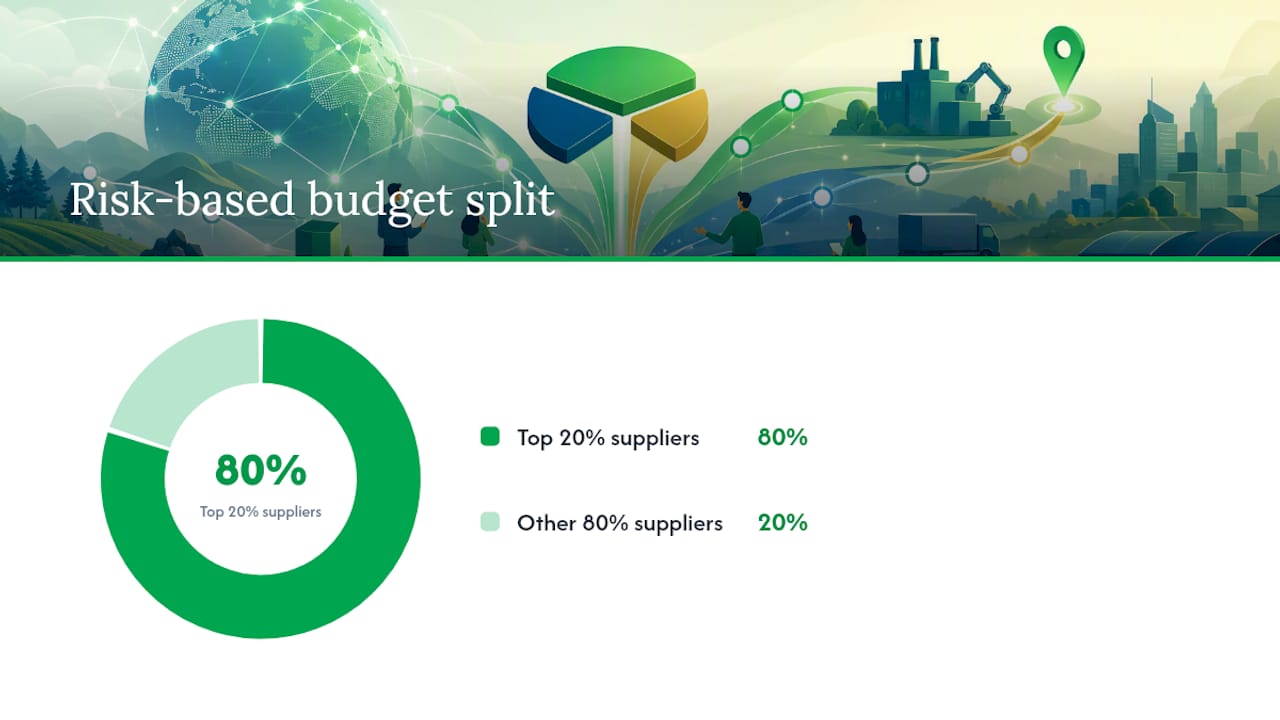
- Segment suppliers. Score every supplier on spend, geography risk, criticality to production, and emissions intensity. This isn't administrative housekeeping. It's how you decide which 20% of your supplier base deserves 80% of your audit budget, since risk-based segmentation consistently outperforms blanket assessment programs that spread thin resources evenly.
- Design the questionnaire. Build fields that capture Scope 3-relevant activity data alongside human rights indicators like wage records, grievance mechanisms, and working-hour documentation. Weak signals include vague narrative answers and missing supporting documents; strong signals include third-party certifications and site-level audit history.
- Remediate and escalate. Set corrective action plans with named owners, hard deadlines, and defined verification checkpoints, then tie those plans to commercial levers like contract renewal or payment terms to get real supplier engagement rather than a signed form filed and forgotten.
- Monitor continuously. Due diligence isn't a annual snapshot. Build a cadence for re-screening high-risk suppliers between full audit cycles.
Pro Tip: Pilot your program on your highest-spend suppliers before rolling out enterprise-wide. You'll surface data-quality problems and questionnaire gaps on a manageable scale, then fix them before they multiply across a 2,000-supplier rollout.
A focused pilot typically runs for a few months and needs a small cross-functional team. Full enterprise rollout across a complex supply base often takes over a year, with cost scaling by supplier count, sector risk, and the extent of manual data cleanup your ERP systems require.
Scaling Due Diligence with Technology and Data Standards
Manual spreadsheets become impractical once your supplier base grows beyond a few hundred. Beyond that, you need infrastructure.
- ESG management platforms and supplier portals automate questionnaire distribution, reminder cycles, scoring, and audit trails, converting raw supplier responses into a defensible record regulators can inspect.
- AI-assisted classification helps sort product-level data into Scope 3 emissions categories faster than manual tagging, improving data quality without requiring an army of analysts.
- Standardized templates and chain-of-custody documentation, including CMRT-style formats, matter because they make independent verification faster and comparable across suppliers using different internal systems.
- Choosing the right architecture depends on scale: off-the-shelf SaaS suits most mid-market programs, while custom integrations make sense only when you're already running mature ERP and procurement systems worth connecting to.
Automated response tracking also builds the auditable trail that regulators increasingly expect as evidence of ongoing, not one-off, diligence.
Common Pitfalls That Undermine Due Diligence Programs
Most program failures trace back to a handful of repeated mistakes:
- Stopping at tier one. Visibility often ends at direct suppliers, leaving tier-two and tier-three risks, where labor and environmental violations concentrate, completely dark.
- Trusting self-assessments alone. Supplier questionnaires without independent verification produce clean-looking data that doesn't hold up under audit or regulatory challenge.
- Finding problems, then doing nothing. A program with no escalation KPIs or remediation deadlines documents risk without managing it.
- Fragmented ownership. When procurement, sustainability, and legal each run separate supplier checks, nobody owns the full risk picture. A cross-functional steering body with clear decision rights fixes this.
Closing the Capability Gap Through Training and Certification
Frameworks and software only work when the people running them know what they're looking at. Reading a supplier audit report, scoping a verification engagement, or interpreting Scope 3 category data all require skills most procurement and sustainability teams weren't trained for.
Esgtraininginstitute's certification programs build exactly this capability: standards-aligned curricula covering carbon accounting, supplier risk assessment, and audit scoping, delivered through credentials trusted by professionals overseeing more than $30 trillion in ESG assets globally.
Programs that combine data, process, and structured training consistently outperform peers on regulatory readiness and their ability to actually remediate supplier issues, rather than just document them.
Recommended pathways vary by role:
- Procurement teams benefit most from supplier risk assessment and questionnaire design modules
- Sustainability leads should prioritize Scope 3 accounting and CSDDD-aligned reporting training
- Assurance practitioners need audit scoping and independent verification credentials
Related reading: five skills every ESG auditor needs covers the technical competencies underlying strong verification work.
Where Leaders Should Focus First
Technology matters less than most vendors claim early on. Supplier engagement and segmentation come first, always, because no platform fixes a poorly mapped chain. Start with a pilot on your highest-risk suppliers, prove the process, then scale. Underinvesting in training is the most common reason programs stall once regulators start asking harder questions.
— Ransford
Get Your Team Audit Ready
The frameworks and playbooks above only work if the people running them can scope an audit, read Scope 3 category data correctly, and defend a corrective action plan under regulatory questioning. That's a skills gap, not a software gap, and it's one most internal teams don't close on their own timeline.
Esgtraininginstitute's accreditation programs are built specifically for procurement, sustainability, and assurance professionals who need to operationalize the OECD framework rather than just understand it on paper. Sustainability leads walk away able to design defensible supplier assessments; risk officers gain the audit-scoping skills regulators expect to see behind a CSDDD-aligned report; assurance practitioners get credentials recognized across jurisdictions where enforcement is tightening fastest. If your program needs to survive a regulator's questions this year, start with your team's readiness. Browse certification pathways and find the track that matches your role.
Primary Sources and Further Reading
- OECD Due Diligence Guidance for Responsible Business Conduct
- European Commission — Corporate Sustainability Due Diligence
- Supply-chain mapping guidance and CSDDD human rights due diligence
Sources
- OECD — Due Diligence Guidance for Responsible Business Conduct
- EU — Due diligence explained / due diligence ready